Monday, May 16, 2011

Ossabaw Weekend Photo Adventure, April 28th-May1- Nancy Lipe

 Imagine tales the trees lining this path could tell, a step back in time.
 Early morning light makes even old tree bones look pretty.
 Morning visit to the boneyard.
 Willet taken from Eric’s boat.
 Shy American Oystercatcher on the beach with a molted shell of a horseshoe crab.
 Smorsbourg of shore birds: foreground, immature and mature Brown Pelican; mid-ground,  Ring-billed Gull; and background, Willet, Marbled Godwit and more.
 Marbled Godwit and Willet on the edge of the surf.
 Shore birds including Willet, Red Knot, and others.
 Red Knot, Willet, Black Skimmer.
 Ring-billed Gull, Willet & Ruddy Turnstone.
 What a beach treasure in early, golden light.
 Nun buoy on the beach.
 Great and Snowy Egret in the pond
 Great and Snowy Egret with ripples in the water.
 What a face!
 Early morning light really makes simple images really pop.
Cannon ball Jelly

Friday, May 13, 2011

Ossabaw Weekend Photo Adventure, April 28th-May1- Jim Williams

 I'm a sucker for silhouettes especially those created by our setting sun.  It was taken the night of the Roseate fly by.  I would like to have used a wider focal length, but the car and people were in the way.
 Of course this is the Avenue of Oaks which seemed to go on forever.  I liked that road but I also liked the road leaving to the left raising the question, "I wonder where that goes?"
 It's the same picture you all saw the first evening, toned down a little, not so much saturation.  It was that rainy Thursday afternoon.  Good light.
 My interpretation of "Beach art." 
 The two mules were great, but the trash can, I think, ruins it.  If I tried to move the can, the mules would have moved,  Catch 22.
 Walking around Middle Plantation,  you had the feeling you shouldn't be there.  Time had stood still, here .
  This was taken within seconds of the sun breaking the horizon with a 600mm lens.  The jagged horizon was real and,  I think, adds to the appeal for the image.
  After one of the passing showers in front of the clubhouse.
 I took some liberties in Photoshop with this image.
To have those 4 Roseate Spoonbills make two fly-bys, made the evening for me.  To get a lucky shot like this made it even nicer.
 This Semi-palmated Plover made a beautiful landing right in front of me and I got a whole series of shots. This was the best, a little soft, but useable.


This was the nest area down by the old marker.  I was watching the plover setting on the nest when she/he got up and went to the shore line and started feeding.    After a few seconds she/he chirped and a different plover, who was feeding about 30' away, took off and landed by the nest.  He/she looked around, checked out the eggs and sat down.  This is the second plover just before he/she sat down.

Wednesday, May 11, 2011

Ossabaw Photo Adventure, April 28th-May1 / Sharon Lindsay

Hi Eric - Please accept my thanks and appreciation for the great workshop you and your crew gave us on Ossabaw Island.  It was a fantastic location enhanced by great weather and nice people. - Sharon Lindsay

It's All In The Feet /  Cormorants demonstrate their bounce takeoff technique to other flock members.  With the proper kick, it is possible to flick sand into the faces of gulls and terns.
Middle Place Sunset / The schoolhouse was an eye catcher and worthy of quite a few photos.  However, the wide expanse of the marsh caught my eye, with the setting sun adding that elusive warm glow.

Moon Rise At South End Beach / The serenity of the beach at daybreak was delightful and it preceded a fabulous day of exploring the island in detail.
Palm Remnants / The setting sun added glow and detail to the standing remains of cabbage palm trees.  It caught my eye and made me wonder why there were so many dead trees in this one site.  Water intrusion?
 Respite At The Oyster Bar /  The proliferation of shore birds seen during the boat trip was a special treat.  This area is obviously a mecca for migrating shorebirds.
Storm Clouds / An afternoon shower gave beautiful clouds and color that enhanced the beauty and scope of the salt marsh.  Clouds can serve as the icing on a plain image.
Tidal Pool Conflict / Two Snowy Egrets argue over which will rule the tidal pool.  Totally irrelevant since the eight foot tidal exchange changes the landscape rapidly.

Friday, May 6, 2011

Photo Safaris / Eric Horan: Ossabaw Weekend Photo Adventure, April 28th-May1

Photo Safaris / Eric Horan: Ossabaw Weekend Photo Adventure, April 28th-May1

Ossabaw Weekend Photo Adventure, April 28th-May1


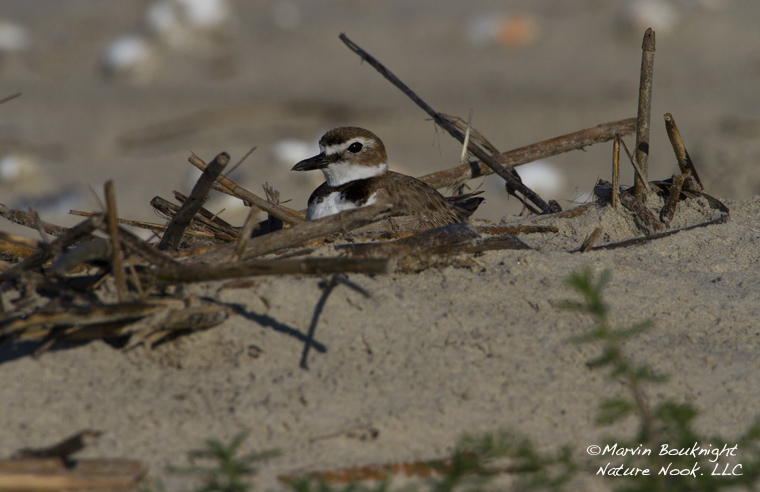
A  20-minute boat ride from Savannah, this 26,000-acre island wilderness is a designated natural heritage reserve set aside for cultural, natural and scientific study, research, and education.  Visiting Ossabaw is going back in time to undeveloped beachfront with overhanging Live Oaks and ancient dead fall. I lead a few (2) hr boating trips for shorebirds but mostly Marvin Bouknight and I lead 14 photographers by pickup truck and on dirt roads, unmarred by road signs or stop lights.  The abundant wildlife is mostly undisturbed by the hand of man on this 24 thousand acre all natural island, about the size of Hilton Head Island. Bone yard beaches and miles of prime shorebird habitat provides a perfect home for nesting Wilson's Plover and other shorebirds. Deer, wild hog, and a plethora of bird species populate the dense maritime forest.  We saw and photographed endangered Wood storks, Roseate Spoonbill, and birds too numerous to name here, visited huge Live Oaks draped in Spanish moss, historic slave quarters and  a school house, even a 1800’s era club house -  which was our temporary home. While anytime of year is worth a trek to this remote island, spring and fall  are ideal for moderate temperatures, increased daylight. Spring is great for flowers and new life of all kinds; Fall for foliage colors, shrimp boat and dolphin activities, both spring & fall are great for the migrating birds.  

Ossabaw Island provides a perfect arena for teaching and learning about the lowcountry's natural history. Marvin and I not only share our knowledge but also learn from the group which is always a multifaceted collection of outdoor enthusiasts.  Daily field trip options on foot, by vehicle and boat.  Fees include everything from leaving your car on the mainland Thursday morning to your return Sunday noon -  water taxis, ground transport, boat tours, field guides, workshops & instruction, meals and overnight bunk accommodations.  Sound like a deal? We think so and hope you will be convinced after viewing the best images by the 16 of us who were just their a short time ago.

For the next couple of weeks I will be posting several of each photographers best images on this blog starting with my co-leader Marvin Bouknight, staff naturalist @ Old field Club.
Crowded Buffet - Many egrets and herons communally roost in trees, but when there  is feeding going on, most of the time these birds are solitary hunters.  When food is very concentrated, then these birds don’t mind being close and you can see egrets, herons, wood storks, etc. all feeding in the same small area. 
Curious Duo - I noticed these two snowy egrets walk away from the crowd and focus on something in the water.  I followed them with my camera and saw that they were looking at a disturbance in the water and it piqued their interest, as well as mine, but they became very still, allowing for an interesting composition with a mirror-like reflection.
Deer on Ossabaw Avenue - I kept watching this little doe cross back and forth, hoping she would eventually feed along the road, so I could include her in my shot.  Patience paid off and she wandered right over to the edge and nibbled on the grass. 
 Evening Photographer - I thought the light was perfect that afternoon and snapped this photo of Eric concentrating on flying night herons, egrets, and other birds circling a roost. 
 Feeding Dunlin - I just love watching these little shorebirds feed and it is extra special when they start to get their breeding plumage.  This little dunlin is starting to get his black belly patch and was just feeding up a storm when I shot this pic.  I love the dimpling in the sand...
"Wilson's Plovers are larger, uncommon plovers related to killdeer, black-bellied plovers, and smaller plovers like the semi-palmated and piping plovers.  They scrape out a depression and lay 2-4 eggs that blend in perfectly with the sand and debris on the beach.  On beaches, sand flats, and oyster banks, it is important to remember that birds like plovers, oystercatchers, etc.  nest in these areas above the high tide line, so it is best to stay below the high tide line to avoid inadvertantly stepping on nests and crushing eggs."
 Male Red-winged Blackbird - This time of year, if you are patient, the red wings sing and fluff up their feathers, especially their epaulets.  If you watch them a little, they will pick a perch, spread their tail, fluff up, and sing.  I just think there is no other bird that exemplifies the marsh like these blackbirds.
 Mud on your face - This little sanderling was feeding and constantly probing the sand.  I wanted to get him with food, but instead, I just got him with a beak full of sand.  I like the way the sand shows how deep the little bird probes..


 Ossabaw Island Images, Tabby Ruins, Ossabaw Oak, Spanish Moss Curtain - These are truly unique images to Ossabaw.  The oak was expansive and hard to get it all in the frame.  The houses and tabby ruins reflect a time gone by.  I think the structures as well as the oaks and Spanish moss really makes Ossabaw stand out in my mind from other places I’ve visited.  The moss is thinner, more vertical, and just...different
Rain Collecting on Tallow Leaf - Plants in a maritime forest deal with excessive moisture as well as the stinging salt water in different ways.  I wanted to show how the tallow leaf utilizes both a “drip tip” to funnel water off the leaves as well as the waxy cuticle protects the leaf surface from both corrosive salt and excessive moisture.

 Roseate Spoonbill Trio and Spoonbill escape - Seeing spoonbills is special, seeing three is great, seeing three adults in full plumage, is wonderful, and seeing them in the light of sunset is just awesome!  I was lucky to get these two photos, with a 500mm, chasing them around in the viewfinder and hoping that I would get at least one good shot!

 Sunrise shots - I like the effect of the sun through trees, especially with a small aperture to create the sunburst.  It’s kinda hard not to shoot a pretty sunrise at Ossabaw!
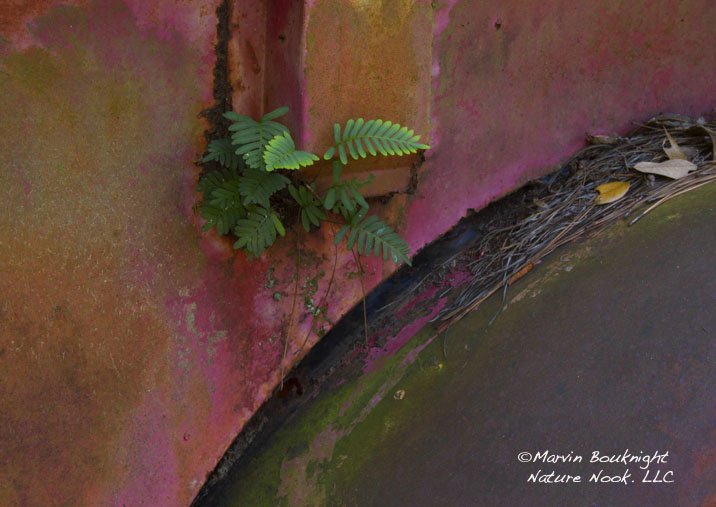
Truck Bed in Graveyard - As a naturalist, I like to see how nature adapts and overcomes.  This little resurrection fern growing on the decaying and rusting truckbed epitomizes the power of nature to take back her property!

Tuesday, May 3, 2011

May 2011 "Photo of the Month"


Fox Pups at Old Field is the result of a field tip from my friend Marvin Bouknight, staff naturalist at Old Field Plantation in Okatie, South Carolina.  He called one morning enthused about a new litter of pups beginning to make aboveground appearances at their resident Red Fox den.  He invited me along for his routine visit to the den on his way home.  In late afternoon light and covered in camouflage, I stretched out flat onto the grassy median of a two-lane residential road with my tripod-mounted 500mm lens.  Marvin staked out our photo territory with two bright orange cones and a street sign “QUIET PLEASE – WILDLIFE ACTIVITY” providing just enough hope that friendly residents might neither stop to chat nor run over us.  This exposure captures the moment two pups surfaced. They soon relaxed and carried on with their evening romp around the neighborhood as Marvin and I headed home to our own dens.

Red Fox live around the world in diverse habitats and adapt well to human environments. They are legendary for their intelligence and cunning ways. Red Fox are omnivores hunting year round for small mammals, rodents, fruits and berries and mostly at night. Living among humans, they also dine on our garbage and pet food.  Females often use the same den for several years and will produce anywhere from 2-12 pups each year.


 PHOTO TIP

For successful wildlife images in the field, the standard photography tool of choice is a long lens (500mm) and tripod.  One of the challenges when using this lens is controlling   the sharp focus on your subject.  While it is difficult to keep the focus on the entire subject, you will want to focus on key elements.  You can experiment with your lens openings (f-stops) to confer with me.  The wider your lens opening, the lower your depth of field.  By stopping down your settings to a smaller lens opening, you will increase the depth of field adding often-welcome inches of sharp focus to key elements such as the eye details. I would suggest that unless your subject is sleeping, sharp focus on the eye might make the difference between a strong image and a disappointment.  With my fox pups, I was able to get both in focus by stopping down from f4.0 to f 8.

To see more about Eric Horan, his images and his Lowcountry Wildlife Photo Safaris, please visit us at www.southernlight.biz.